
A low credit score follows you everywhere. It shows up in your loan rate, your credit card approval odds, sometimes even your apartment application. The good news is that credit scores aren’t fixed. If you want to improve credit score fast, a handful of specific moves can show measurable results within one billing cycle. Others take a few months. Every method below is a legitimate way to improve credit score fast, nothing here relies on gimmicks. None of them require a “credit repair” service or a mystery hack you saw on social media.
This guide breaks down exactly how to improve credit score fast, ranked roughly by how quickly each step shows up on your report.
Why “Fast” Actually Means 30 to 60 Days
Before diving into the steps, it helps to set expectations. Nothing improves a credit score overnight, no matter what an ad promises. But some factors update faster than others. Credit utilization gets recalculated every time your card issuer reports to the bureaus, usually monthly. Payment history builds more slowly since it’s an average over time. So when people ask how to improve credit score fast, they usually mean utilization first, because that’s the lever that moves within a single billing cycle.That’s the real timeline to keep in mind whenever someone promises to improve credit score fast overnight.
1. Pay Down Your Credit Card Balances First
If you only do one thing on this list, do this one. Credit utilization, the percentage of your available credit that you’re currently using, makes up 30% of your FICO score. Unlike payment history, utilization isn’t tracked over time. It’s a snapshot, recalculated fresh every reporting cycle.
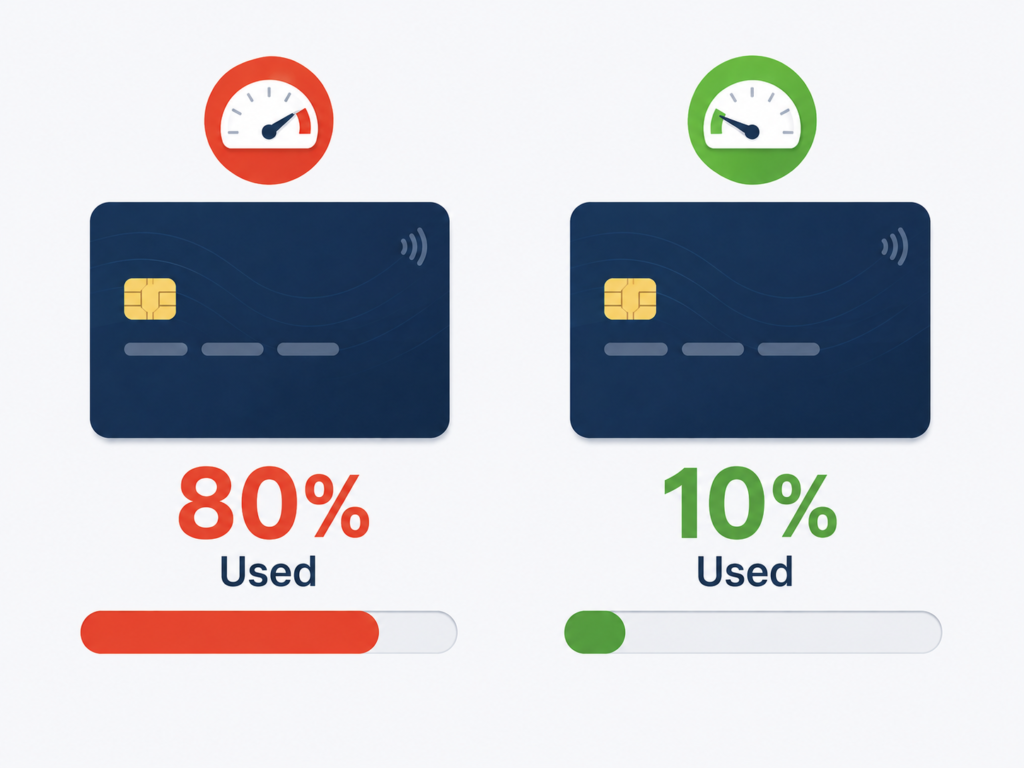
Say you have a card with a $500 limit and a $400 balance. That’s 80% utilization, and it hurts your score more than a $10,000 limit with a $2,000 balance, even though the second balance is five times bigger in raw dollars. The percentage is what matters, not the amount.
Aim to keep overall utilization under 30%. Under 10% is even better if you can manage it. Here’s a detail most guides skip: pay your balance down before your statement closing date, not just before the due date. The statement closing date is what actually gets reported to the bureaus. Paying two days after your due date but before the next statement closes still helps your score, since the lower balance is what gets sent to the credit bureaus.
This single habit does more for your number than almost anything else on this list. Everything else matters too, but utilization is where the quickest points come from. If you’re also dealing with unexpected expenses while you work on this, our $200 loan instant approval guide covers short-term options.
2. Dispute Errors on Your Credit Report to Improve Credit Score Fast
Credit reports have mistakes more often than most people assume. A collection that was already paid off, an account that isn’t even yours, a late payment that was actually made on time. Pull your free reports from all three bureaus at AnnualCreditReport.com and go through them line by line. Don’t skim.
If you spot something wrong, file a dispute directly with the bureau reporting it, or through the CFPB’s complaint portal if the bureau drags its feet. Disputes typically get resolved within 30 days. If the error gets removed, the score bump can be immediate and sometimes significant, especially when the error was a collection account dragging your score down.
Disputing errors is an underrated way to improve credit score fast because it costs nothing and takes maybe twenty minutes of your time.
3. Check Whether Medical Debt Already Disappeared From Your Report
This is the one most credit guides still haven’t caught up on. A CFPB rule that took effect in 2025 removed most medical debt from credit reports entirely. Before this rule, medical debt was the single most common type of collection sitting on credit files, appearing on roughly 43 million Americans’ reports.
If you had a medical collection on your file, there’s a real chance it’s already gone and you simply haven’t noticed. People affected by this change saw score jumps in the 20 to 40 point range, without lifting a finger. It costs nothing to check. Pull your report and see if that old medical bill is still sitting there or if it’s quietly vanished.
For anyone carrying old medical collections, this single check might be the easiest way to improve credit score fast without changing a single spending habit.
4. Become an Authorized User on Someone Else’s Card
If a parent, spouse, or sibling has a credit card with years of on-time payments and low utilization, ask if they’ll add you as an authorized user. Their account history gets attached to your credit file. You don’t even need to carry or use the physical card for the tradeline to count.
This works best when the primary account has a long history (five-plus years), consistently low utilization, and zero late payments. Skip this option if the primary cardholder has missed payments or runs high balances, because that history transfers too, and not in your favor. Choose carefully here, since a bad tradeline can drag your score down instead of lifting it. Used right, this tactic is a quiet way to improve credit score fast without opening a single new account of your own.
5. Consider a Credit-Builder Loan
If your file is thin or you’re starting from scratch, a credit-builder loan works differently than a normal loan and is a solid option to improve credit score fast when there’s little history to build on. You “borrow” money that actually sits in a locked savings account while you make monthly payments. Those payments get reported as installment loan history, and at the end of the term, you get the money plus a payment record to show for it.
Credit unions and online lenders like Self and Credit Strong offer these products. Pair one with a small recurring charge on a credit card (a streaming subscription works fine), paid off in full every month, and six months of consistent behavior can move a thin file from “no score” status into the 650 to 700 range. This is one of the more reliable ways to improve credit score fast if you don’t have much credit history to work with yet.
What NOT to Do
Don’t close old credit cards. Length of credit history matters, and closing an old account shortens your average account age while also cutting your total available credit, which raises your utilization on paper.
Don’t apply for several new cards at once. Each hard inquiry knocks a few points off temporarily, and multiple applications in a short window signals risk to lenders, not responsibility.
Don’t pay a “credit repair” company to dispute things you can dispute yourself for free. The dispute process is identical whether you do it or they do it. You’re just paying for someone else’s twenty minutes.
Avoiding these three mistakes matters just as much as the active steps above, since one bad move can undo weeks of progress in a single reporting cycle. Knowing what to avoid is half the job when you want to improve credit score fast.
One More Thing: Newer Scoring Models Changed the Math
FICO 10T and VantageScore 4.0 are gradually replacing older scoring versions at many lenders. Under these newer models, someone who pays their card in full every month looks noticeably better than someone carrying a balance, even if both show identical utilization on the day their statement closes. This shift is worth knowing about if you’re trying to improve credit score fast heading into a big purchase. If your goal is a mortgage, though, this mostly doesn’t apply yet, since most mortgage lenders still rely on older FICO versions.
FAQ
How fast can my credit score actually go up? Focus on utilization first. Changes there can reflect within one to two billing cycles, so 30 to 60 days is a realistic timeline. Payment history improvements take longer since they build gradually over months.
Can I raise my score by 100 points overnight? Not through normal means. If you’re hoping to improve credit score fast in one giant leap, temper expectations, large jumps usually only happen when a significant error or an entire collection account gets removed from your report, like the medical debt changes mentioned above.
Does checking my own credit score hurt it? No. Checking your own score is a soft inquiry and has zero impact. Only hard inquiries from lenders during an actual application affect your score.
Every step above works toward one goal: helping you improve credit score fast without paying for services you can do yourself. A better score also opens up cheaper borrowing options down the line, from lower interest rates to better card offers. If you’re weighing loan choices right now, our personal finance guide covers budgeting and debt basics that pair well with the steps above. Start with utilization, check for the medical debt removal, and you’ll likely see movement before the month is out. That’s the fastest realistic path to improve credit score fast without gimmicks or paid services.